
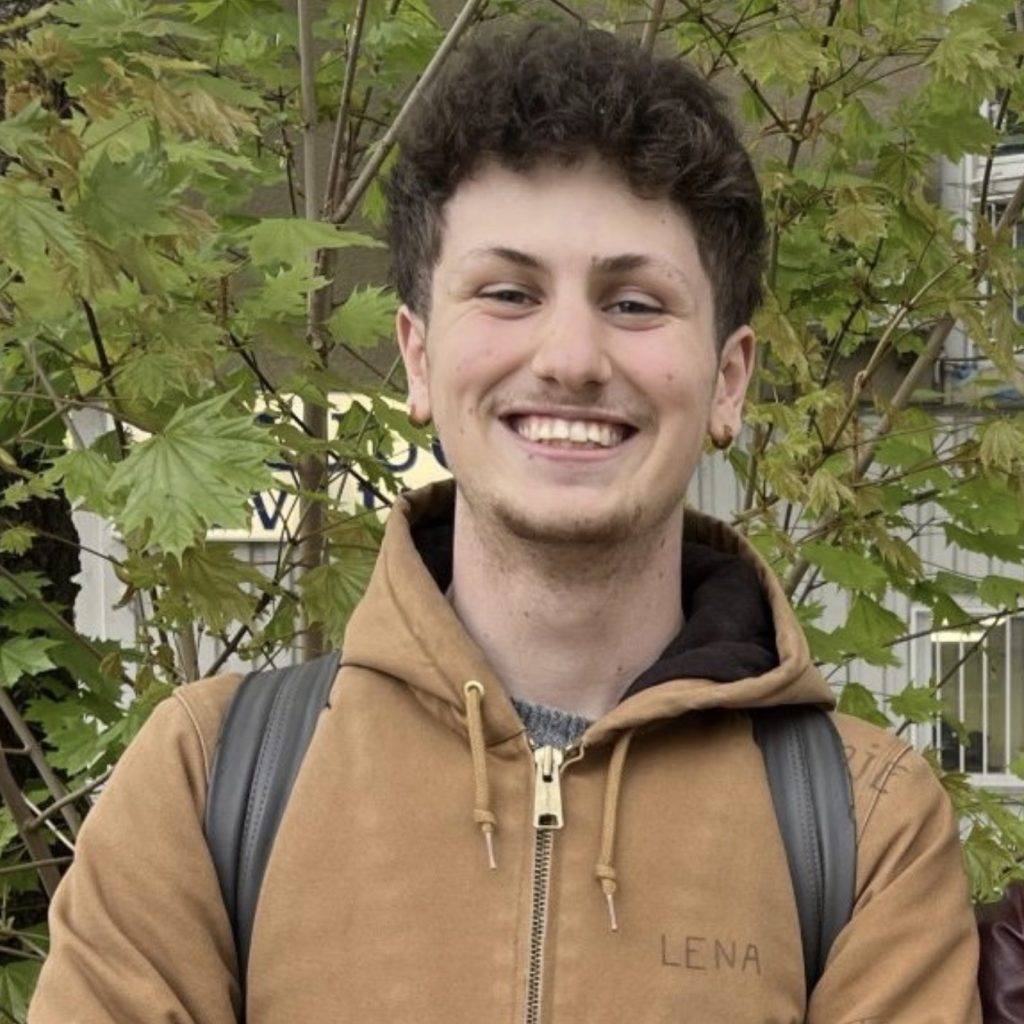
Ruben Buysse
social work student
A space to fall back is a place to fight back
7. 5. 2026
Only if you have a space to fall back, you can fight back.
Normally I was going to do a practicum with another organization, but in my first conversation with them they mentioned that the participants of their organization are young men and thus not always LGBTQ friendly. The participants where the type of boys who thinks everything is gay. When I was sitting in the bus on my way home this made me think.
Everyone who does Erasmus has a reason to do so. Every Erasmus experience has a subject. Some people do it to travel every weekend. Others do it for drinking, or to experiment with sex. Some do it for the classes or to learn the language or just to do leave home.
Before I left for Ljubljana, I had decided the subject of my Erasmus would be to experiment with queer spaces and being queer. My town doesn’t have a gay club, Ljubljana does. Ljubljana has queer spaces; it has drag shows, it has a pride. Not only did I want to be in in Ljubljana for the classes and the beauty, I also wanted to be where my people are.
My first practicum location would not have prevented that. People not being LGBTQ-friendly opens to possibility of conversation. My queerness would still be the subject of the conversation. I could observe the difference between queer-negative and queer-positive places. I could argue about my queerness during the day and immerse in it in the evening. But needing to defend it also means that if I would experiment with my looks, I would have to explain it. I would be in a spotlight. My existence was already wrong, every scarf, every earring would be another step too far. And to be honest I didn’t know if I had the energy to fight. I was scared that after a while it would be too tiring, and I would leave my scarfs and earrings at home.
Switching was not easy though, because at first like I was abandoning the fight.
Still I switched to Moja Mavrica, I didn’t want to be looked at and not understood. I wanted to be looked at and be supported, and that’s exactly what happened.
During my first activity, I spent the whole time just looking at people’s clothes. The hair clips. The ties. The rings and necklaces. The way they wore it. The reason they wore it.
If you didn’t know this was a queer positive space, you would not think of it immediately, but that’s what I liked about it. There was not spotlight. Being queer was something normal.
Even though the clothes were not per say gender challenging. The clothing styles were personal. They were unique. Every person had their own silhouette and that motivated me to find my own. It motivated me to be personal.
I didn’t have to defend my right to exist. I implicitly got the space to ask my self what that right means to me. I got the space to ask myself: how could I be more queer. Which clothes did I not dare to wear. Which gender expectation do I want to challenge today. And I got complimented for it.
There is this quote of which I think often. It comes from the podcast of Dan Savage in an episode where he discusses the then recent inauguration of trump. He said: “during the darkest days of the AIDS crisis we buried our friends in the morning, we protested in the afternoon, and we danced all night, and it was the dance that kept us in the fight because it was the dance we were fighting for.”
I bring this up because this quote affirmed me in my choice in choosing for a queer organisation. Working in a queer organisation is the thing that makes me able to fight for my rights.
When I come in my bedazzled outfits to our events, I walked trough the public space to get here. A homophobic teen might’ve seen me and thought of me. A queer child might’ve seen me and might remember me.
If you are ever tired of fighting, or you feel like you should fight every minute of your life to keep the darkness at bay. Don’t forget, the dance is also fighting. Filling the queer spaces, supporting queer businesses and wearing clothes you feel personal in, is also part of the fight. They are essential to the fight.