
Zavod Moja mavrica
Zavod Moja mavrica
Social Worker
(internship placement for Masters’ students, 2025)
Social work internship at Moja mavrica: About ecofeminist social work practices in the green city of Ljubljana.
Eco-Social Practices
in a Green City
16. 11. 2025
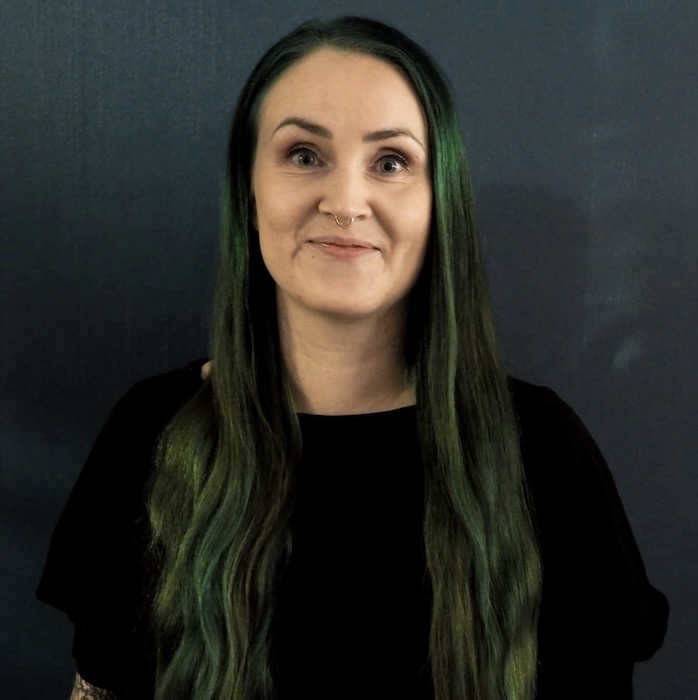
Greetings from the rainy north! I am Helene, a 34-year-old mother of a young child, and an animal and human rights activist from Finland. I graduated with a master’s degree in social sciences in October 2025. In early summer 2025, I completed a social work internship abroad as part of my studies. Quite unexpectedly, I found a placement in Slovenia with Moja Mavrica. During my two-month internship, my tasks were diverse and included planning and organizing various activities, conducting interviews on different topics and writing a research report.
The lush greenery of Ljubljana, nestled beneath the mountains, captivated me from the very first moment. The city center blends seamlessly with nature, living and changing alongside it. The core of the city is reserved for pedestrians, who are invited by the Ljubljanica River and the over 200-year-old Tivoli Park to pause in the shade of trees amidst the rush of daily life. Cherry trees were in bloom, ivy covered the walls of buildings and tree trunks, and lawns and plants were allowed to grow freely and wildly throughout the city.
I was able to design my work tasks partly according to my own interests, which meant that eco-social perspectives played a central role throughout the internship. I am interested in the relationship between social work and nature, and one of my main goals was to put eco-social social work into practice. I planned and organized an eco-social workshop and a reading circle on the topic, as well as various low-threshold activities. These included outdoor excursions, street activism, and a Jane’s Walk guided tour during which we discussed the ecological crisis, climate anxiety, and ways to reduce our personal environmental footprint in everyday life. We also conducted several interviews with local environmental, human rights, and animal rights activists to deepen our understanding and share information on the topic.
Taking advantage of the natural environment and the green city in our work was easy in Ljubljana’s warm, though occasionally rainy, spring and early summer. Using nature to promote one’s well-being is familiar to many of us, but how aware are we really of our dependence on nature and its health? Ecological crises such as climate change, species extinction, and biodiversity loss affect different communities in different ways. Environmental changes are already impacting millions of people who are in vulnerable positions. Marginalized groups, indigenous peoples, low-income families, and people living in the Global South suffer from polluted environments, extreme weather conditions, and food and water shortages. Droughts, floods, hurricanes, rising sea levels, and conflicts linked to deteriorating living conditions and livelihoods are forcing increasing numbers of people to leave their homes. Such displacement exposes people to exploitation and increases the need for humanitarian aid, for example in refugee camps. Forced migration also exposes individuals to various forms of vulnerability and insecurity, including experiences of gender-based violence.
Slovenians have already suffered from climate change. During the summer months, city centers have become unbearably hot more often and for longer periods of time, and two years ago Slovenia experienced the worst floods in decades. The floods caused by heavy rains in 2023 have been described as the worst natural disaster the country has ever faced. They led to the deaths of at least seven people and caused billions of euros in damage across society. More than 8,000 people had to be evacuated, and people lost all their belongings in an instant. Local social workers said that they were unprepared for a crisis in which thousands of people were suddenly in urgent need of assistance and where working conditions had become extremely difficult. People lacked necessities such as shelter, food, and electricity, and social workers also tried to provide psychosocial support amidst a massive collective crisis. Clearing the destruction required the solidarity of thousands of volunteers. Even Finland is not immune to the effects of ecological crises. The Baltic Sea is warming and becoming more eutrophic, snowfall is decreasing, heatwaves are becoming more frequent, and the situation of many plant and animal species is deteriorating. Every ninth Finnish species and every second habitat type in Finland is endangered.
Eco-social social work includes an understanding of humans as part of nature, combining ecological, social, and economic justice. It also carries a critical stance toward our capitalist economic system. Overconsumption of natural resources is the root cause of global environmental crises. Unfortunately, the narrow understanding of the role of social work in Finland prevents the development of eco-social practices within the field. Promoting the well-being of both people and the planet requires a holistic transformation that must occur on multiple levels, from personal and community to structural and political.
I believe that within social work, and society more broadly, we need to critically reflect on our own participation in a system based on endless growth and consumption. Social work aims to promote the well-being, participation, and agency of individuals and families. However, we must ask: what kind of agency do we want to promote and embody ourselves? How can we, through social work, support more diverse forms of social participation, such as responsible civic engagement or political advocacy? How can we examine the sustainability and ethics of our own practices from a planetary perspective? Before we begin advising our clients on recycling, I believe it is essential to first reflect on our own ways of living and consuming. Social workers are often middle-class white women with multiple privileges and opportunities to reduce their personal environmental footprint. If we truly want to promote justice and show solidarity with those most affected by ecological crises, it is time for us to move toward more sustainable and slower ways of living.
My internship in Moja Mavrica and eco-social practices demonstrated in a tangible way that young people are deeply concerned about the environment, the state of nature, and their own future. They question their possibilities to start a family, build a career, or even simply survive. Climate anxiety is real, and young people demand concrete action. The experience also revealed that despite the enormous human and financial toll of climate change, social work has yet to commit to strengthening its capacity to promote ecological justice and the protection of life. Social workers are regularly trained in current issues, but when will we realize that we must expand our understanding of environmental crises and their impacts on vulnerable groups? When will we begin working with local actors and residents to create sustainable community-based initiatives and preparedness plans? We must build local networks of social workers who innovate eco-social practices while extending their connections nationally and globally. Recognizing the ecological crisis as a human rights issue must become integral to all areas of social work practice. The time for eco-social social work is now.
I am deeply grateful to the warm, professional, and open community of Moja Mavrica, where I was given the opportunity to engage in social work aligned with my interests and values, to create new ideas, to learn and grow.