Lori Šramel Čebular
Can We Challenge the System from Within?
9. 9. 2026
What does political participation actually mean? Voting in elections, joining a political party or signing a petition might be some of the first examples that come to mind. But political participation can also happen outside established institutions: through protests, occupations, grassroots organising and other forms of collective action.
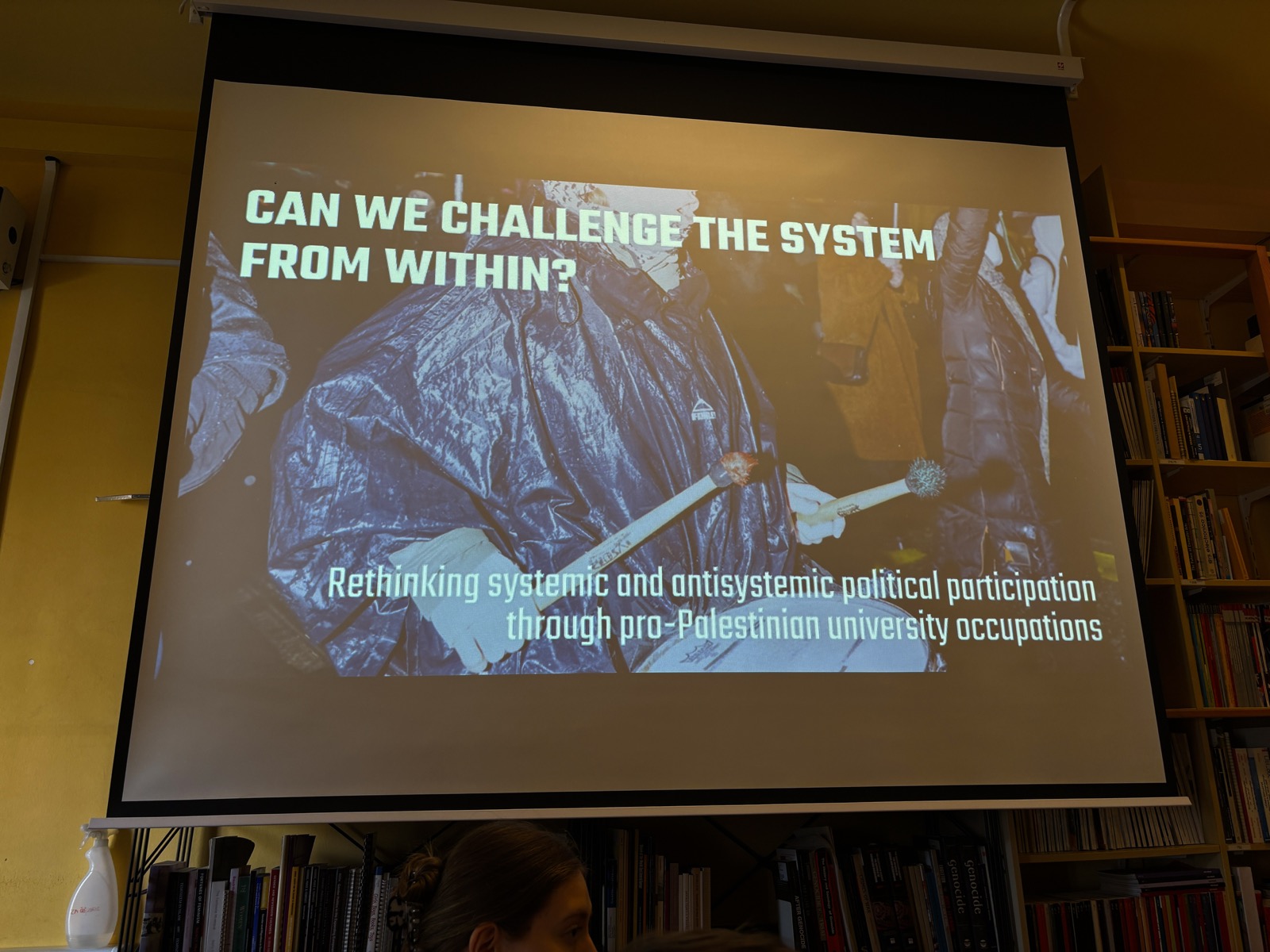
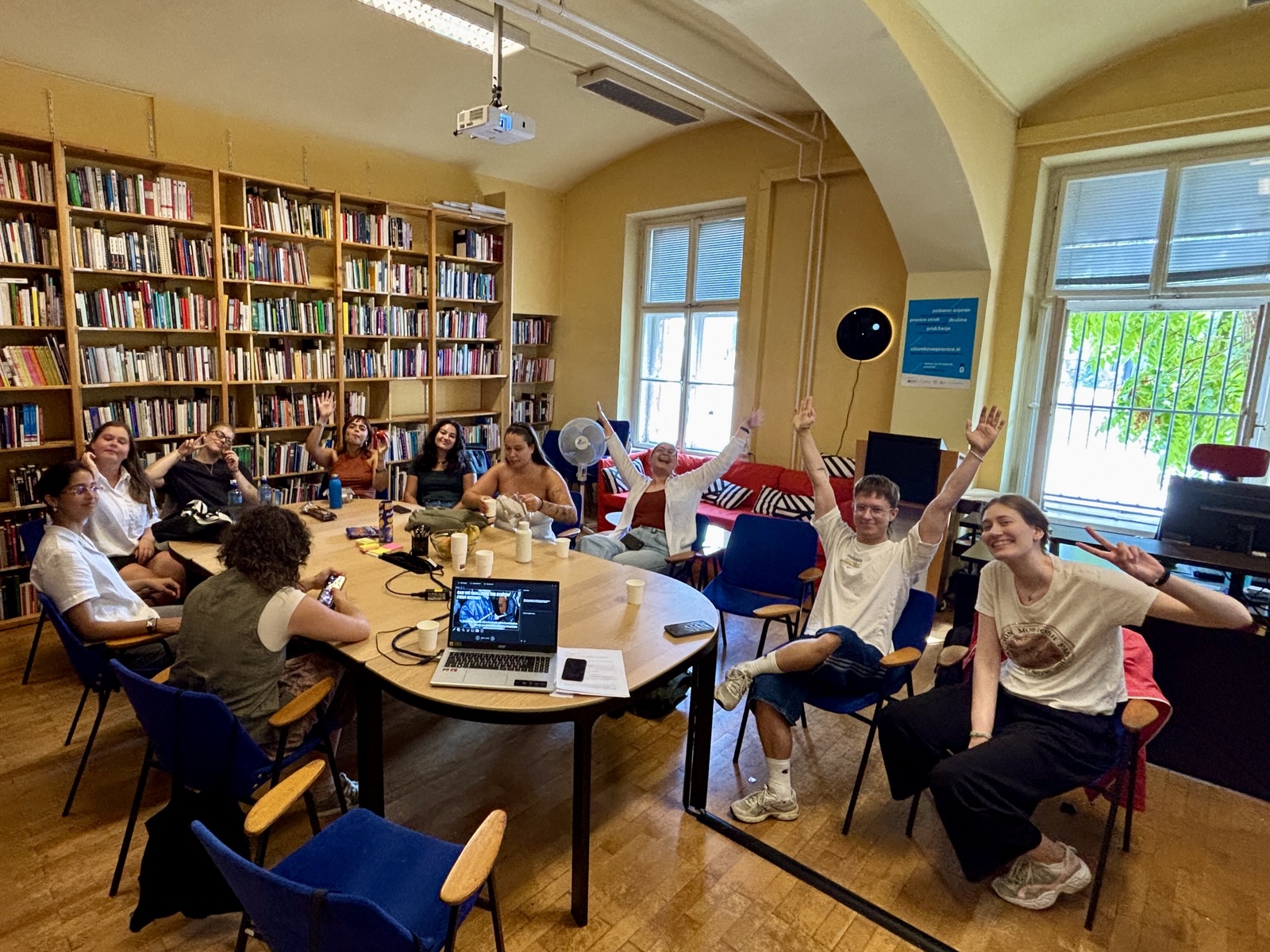
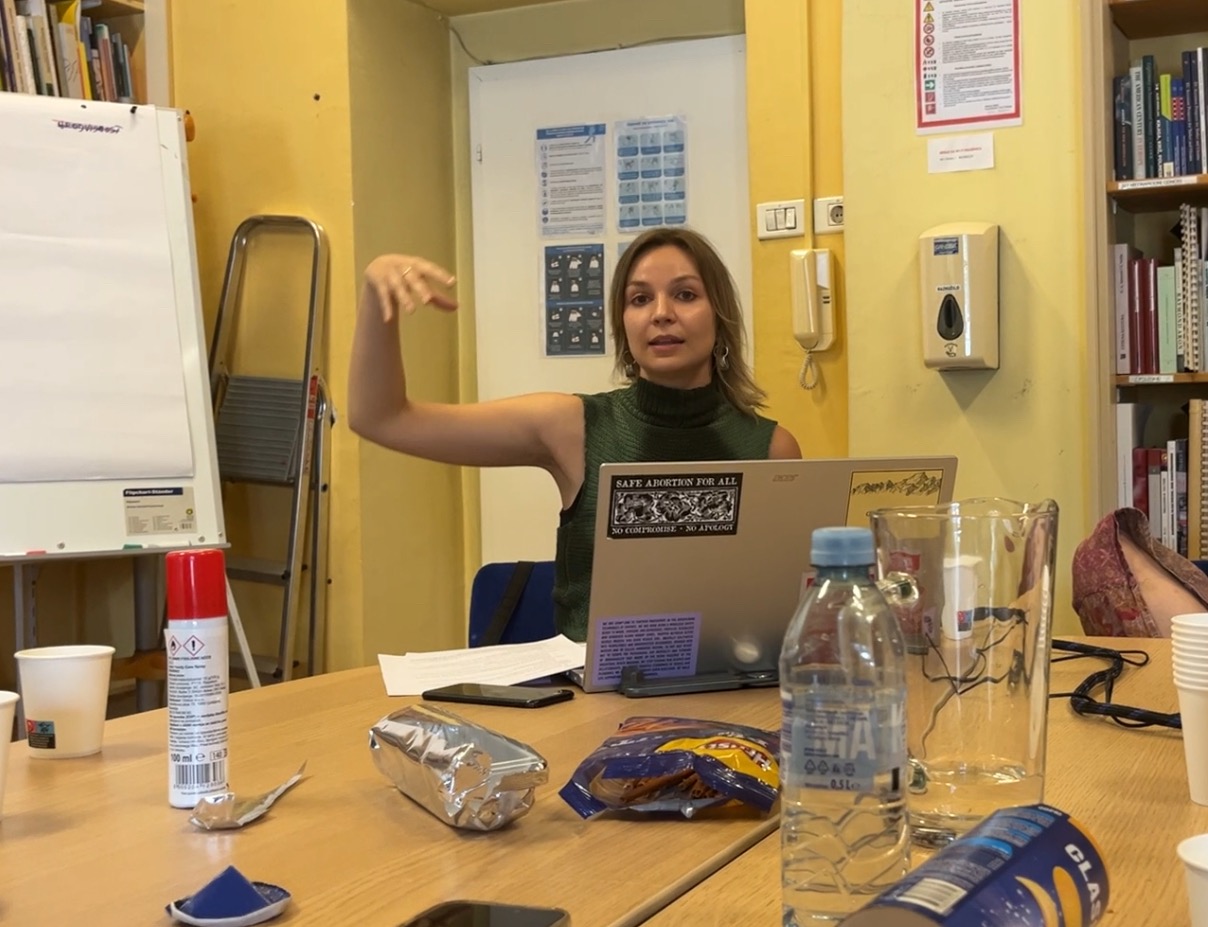
This was the starting point of a workshop led by Lori Šramel Čebular from Kolektiv Rosa, a Ljubljana-based youth organization. Under the title “Can we challenge the system from within? Rethinking systemic and antisystemic political participation through Pro-Palestinian university occupations”, the workshop explored different forms of political organising and asked an important question: how can use our collective force to put pressure on institutionalized political structures?
We began by discussing our own understanding of political participation and our personal experiences with it. The conversation quickly showed how different political participation can be experienced depending on where someone comes from and under what political circumstances they have lived. Experiences of war, political instability, or restrictions on political organising can make participation both harder or even impossible. Citizenship also shapes the possibilities people have to participate. Having ties to more than one country can create political awareness from an early age by highlighting differences between societies and exposing inequalities or experiences of discrimination. The discussion made clear that people do not enter political participation from equal starting points.
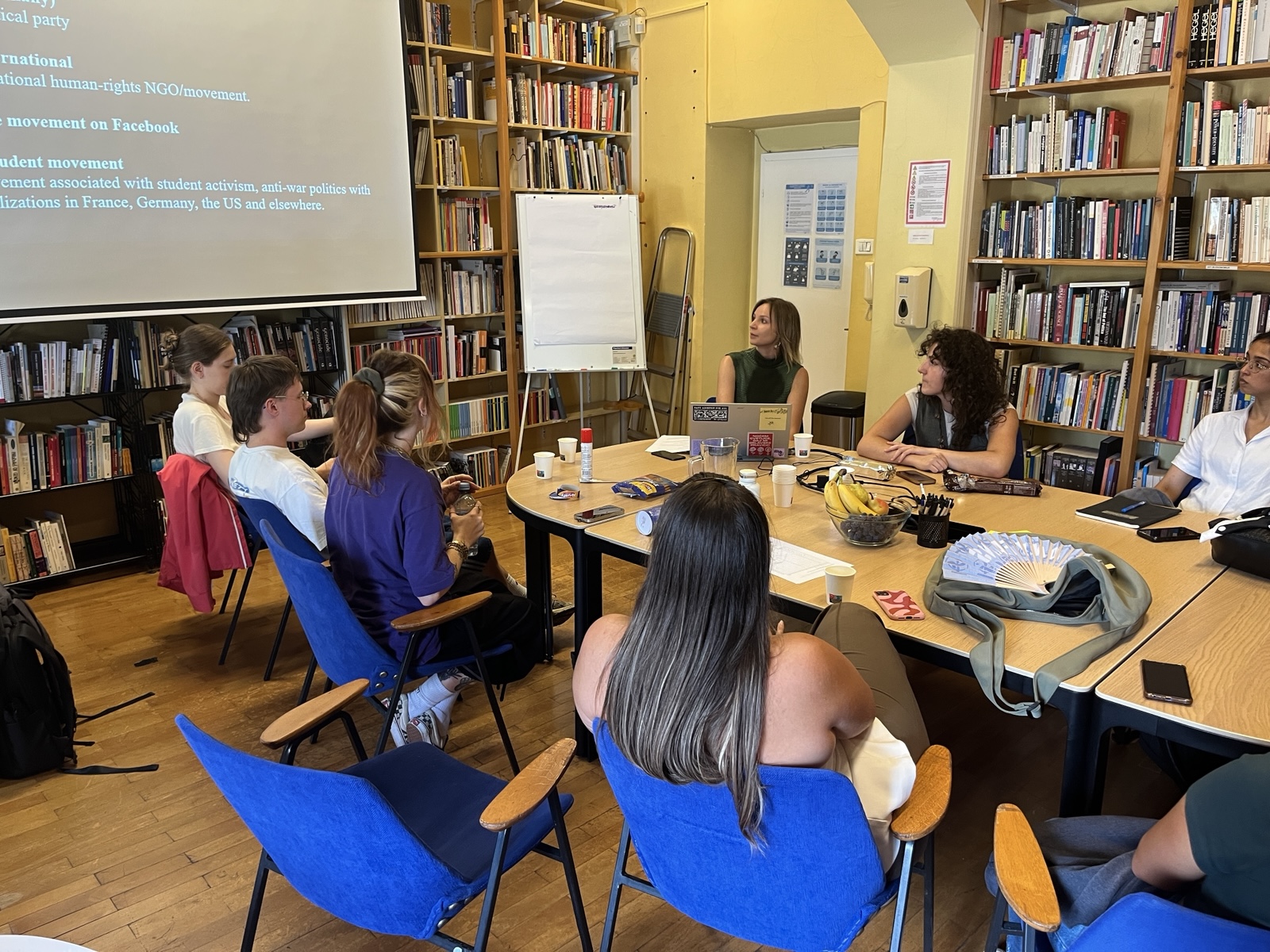
After this we moved to an exercise where we compared different forms of political organization. Examples included a leftist political party, Amnesty International, an anti-vaccination Facebook group and the student movements of 1968. We discussed which could be understood as more formal forms of political participation and which represented informal organising. The exercise also raised a more complicated question. Formal organizations can have access to politicians, institutions and decision-making processes, but being recognized by the system can also limit the kinds of pressure they are able to create. Informal movements, demonstrations and occupations can therefore play another role: they can make an issue impossible to ignore and put pressure on institutions.
The main example of this was the six-day pro-Palestinian occupation of the Faculty of Social Sciences at the University of Ljubljana in May 2024, an action in which people involved with Rosa played an important role. Students occupied part of the faculty and demanded a stronger institutional response to the war in Gaza and to the university’s relationships with Israeli institutions. After six days, the faculty accepted the students’ demands and issued a statement supporting their calls, after which the occupation ended.
What was especially interesting about hearing the story directly from Lori was how much planning existed behind an action that, from the outside, might appear spontaneous. Before entering the faculty, the organizers did not know whether they would actually be allowed inside. They therefore had to prepare for different scenarios. Even speeches had to be planned differently depending on whether the occupation succeeded. The presence of police also shaped what could be said and done, and organizers had to make sure that the action remained peaceful and that the faculty building was not damaged.
At the same time, the occupation was not organised by students completely alone. Solidarity appeared in important forms. Materials needed for the occupation had already been stored inside the faculty with support from a member of the academic community. This showed that political organising is not only about the people who are most visible during a protest. Successful collective action can depend on networks of people who contribute in different ways. Another interesting strategy concerned negotiations with university representatives. Instead of having important discussions behind closed doors, organizers wanted negotiations concerning their demands to take place openly in front of the people participating in the occupation. Transparency became a form of political pressure: decisions were harder to postpone when the community affected by them could directly hear what was being said.
The workshop therefore complicated the simple distinction between working inside and outside the system. The occupation itself was an example of informal political action, but its goal was to change the decisions of an institution. At the same time, support from students, university staff and formal faculty structures became important for achieving change. Perhaps this is why the question in the workshop title” Can we challenge the system from within?” does not have a simple yes or no answer. Political change can happen through institutions, but institutions are also often moved by pressure coming from outside them. Formal and informal political participation do not necessarily compete with each other. Instead, they can operate together. The workshop showed that political participation is ultimately about more than simply having a voice. It is also about creating the conditions in which that voice has to be heard. Huge thanks to Lori for sharing her experiences and knowledge on this topic.